

People have all kinds of images in their heads when they think of an author at work. Some imagine a grand library, mahogany desk, moody candlelight, and complete silence. My reality? Let’s just say it’s a bit less “Victorian novelist” and a bit more “controlled chaos with snacks, a herd of animals, and the TV playing in the background.” And honestly, I wouldn’t have it any other way.
My Writing Habitat
My desk and computer are nestled right in my bedroom. It’s not a Pinterest-perfect office, but it’s cozy and familiar—surrounded by my fiancé, who is usually nearby (sometimes just as tangled up in his phone or TV show as I am in my stories), and a merry cast of creatures: dogs, cats, and whichever critter decides to make my lap or keyboard their new throne that day. In a way, they’re all part of my writing ritual. Their presence means comfort, even if their “help” is sometimes more distracting than inspiring.
The Night Owl in Me
I’ve never been a morning person. My mind kicks into gear in the late afternoon or, more often, well after dark. There’s something about the world getting quieter that helps me hear my own stories more clearly. Most of my best ideas, the ones that really stick, seem to arrive just as the rest of the world is winding down.
My loyal companions—aside from the furry ones—are usually a glass of Coke Zero, Dr Pepper Zero, or a strong iced coffee, depending on the mood and how much caffeine my body thinks it can handle. As a diabetic, I’m careful about what’s within arm’s reach: salted peanuts or almonds are my go-to snacks, fueling late-night inspiration without the sugar crash.
Easing Into Writing
Unlike some authors, I don’t have a set “starting” routine. I don’t meditate or light a special candle or read inspiring quotes (though all those things sound nice in theory). For me, the transition into writing mode usually involves a quick game on my phone. It sounds simple, but those few minutes of casual gameplay let my mind relax and quiet down, especially on days when anxiety tries to tag along. Once I feel my thoughts slow and settle, I know I’m ready to open my manuscript.
The Sounds of My Sanctuary
Silence? Not in my world. Between my fiancé’s TV shows, his phone notifications, and the dogs and cat having their own adventures, there’s always some sort of background soundtrack. I used to think I needed quiet to write, but now I find comfort in the everyday noise of our shared life. The gentle chaos keeps me grounded, reminding me that stories are lived as much as they’re written.
Writing with a Disability
Here’s where my routine takes a unique turn: I type with my mouth, using a stylus. My disability means my hands can’t do the typing for me, so I’ve learned to navigate the keyboard in my own way—one letter at a time, stylus balanced carefully, patience always required.
On top of that, I also write using only one eye. Because of glaucoma, I am blind in my right eye, which adds another layer of challenge and determination to every writing session.
This reality shapes everything about my writing process.
Because it’s physically demanding, typing for hours on end just isn’t possible. I have to take frequent breaks—sometimes after just a few hundred words, sometimes after a scene or even a stubborn paragraph. My jaw and neck need time to rest, and sometimes my focus does too. I’ve learned not to fight it. Instead, I work with the rhythm of my body, giving myself grace on days when writing feels slower or more challenging.
Sometimes I get frustrated, sure. There are moments when the story in my head is racing, but my body insists I pause. But I’ve also found that those breaks—forced though they may be—are often the exact space my creativity needs to recharge. Ideas simmer, scenes rearrange themselves, and by the time I return, I’m often clearer about what I want to say.
When Writer’s Block Hits
I’ve been lucky: writer’s block doesn’t show up often. But when it does, I’ve developed a trick that works for me. I open a blank Word document and use the speech-to-text feature on my phone. I talk through my ideas, problems, or even outright complain about whatever scene has me stuck. What comes out is usually a rambling mess, but that’s exactly the point. Later, I can sift through the chaos, find the gold nuggets, and reshape them into something that makes sense.
The Flow of Writing—and Interruptions
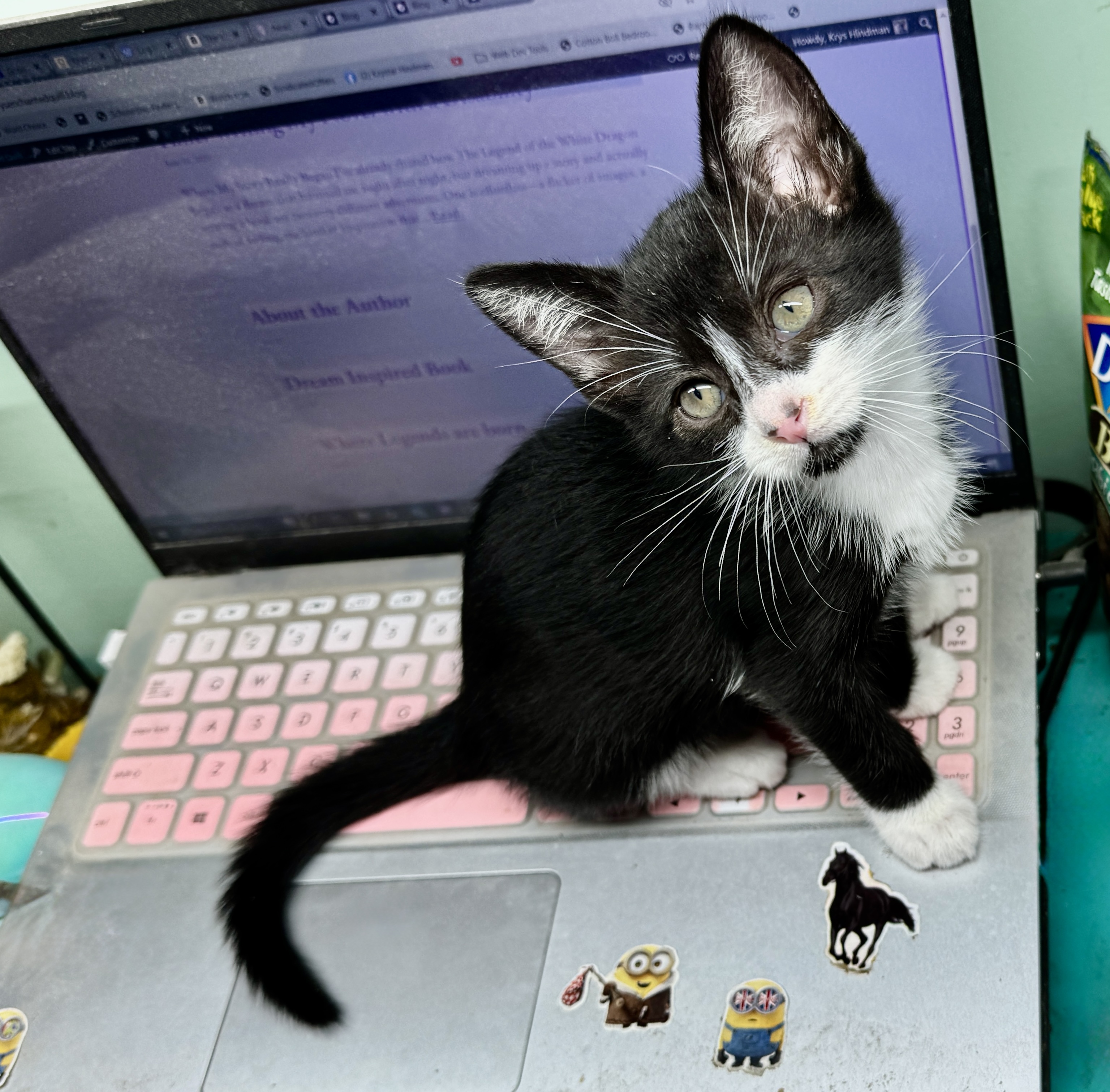
this is one of my many helpers
I don’t set strict schedules for myself. Instead, I set goals that feel doable for that day—maybe a certain word count, maybe just a scene or an idea I want to pin down before bed. With so many creatures under one roof (human and otherwise), interruptions are a given. But honestly, those interruptions are often gifts in disguise. Whether I’m stopping to cuddle a needy dog or cat, or giving my fiancé advice about which pet needs what food (because in this house, feeding time is a team effort), those little pauses give my mind space to work on stubborn plot problems in the background. I can’t tell you how many times I’ve figured out a tricky scene or solved a character dilemma in the middle of helping with animal care or just enjoying a quiet moment with one of my critters.
Giving Myself Permission to Rest
I used to worry that real writers wrote every day, come rain or shine. But I’ve learned that’s just not how my creativity works—or how my body works, either. Some days I’ll write for hours and feel unstoppable. Other times, I’ll go several days without writing a word. I don’t punish myself for taking breaks. I trust that the story is still there, growing quietly until I’m ready to bring it to the page again.
My Little Quirks
No superstitions here, but I do have a stubborn streak: I hate leaving a chapter unfinished. My OCD won’t let me rest easy if something is left hanging. If I start a chapter, I do my best to push through until I reach the end—or at least get close enough that my mind can let it go for the night. The only time I’ll let myself stop mid-chapter is if a scene is truly tangled and needs a little extra time to brew in the back of my mind.
The Real Magic
Writing isn’t glamorous in my world, but it’s deeply personal. Every word is a small act of determination—a collaboration between my mind, my body, my support system, and yes, my furry audience. My process is shaped by my disability, my environment, and my own willingness to meet creativity where it finds me.
I hope that by sharing the reality of how I write—stylus, snacks, chaos, and all—I can offer a little encouragement to anyone whose journey looks different from the “typical” writer. There’s no right way to write a book, just your way.

What about you? Do you have writing rituals, creative habits, or daily chaos that makes your process unique? Share in the comments—I’d love to hear your story, too.

 Krys’ Enchanted Quill
Leave a comment