

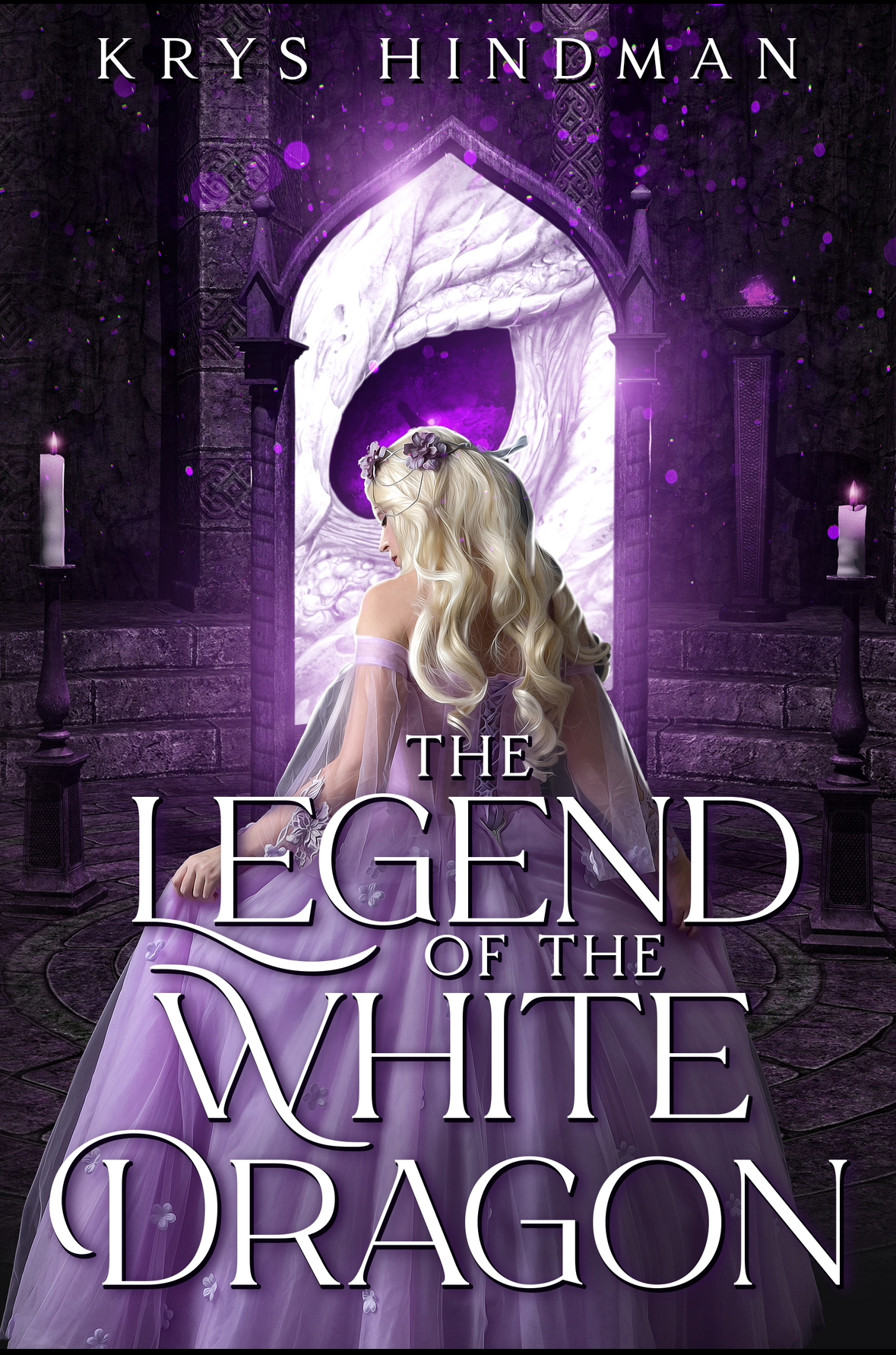
Where My Story Really Began
I’ve already shared how The Legend of the White Dragon began as a dream that haunted me night after night, but dreaming up a story and actually writing a book are two very different adventures. One is effortless—a flicker of images, a rush of feeling, the kind of inspiration that sweeps through you in the quiet dark. The other is… well, sometimes it feels like calling a legend into existence, one keystroke at a time.
If you’ve ever woken up from a dream so vivid it seemed to follow you into the daylight, you’ll know what I mean. That was my life for a month—every night, a story unfolded behind my eyelids, picking up right where it left off the night before. Characters grew bolder, their world more vibrant. It was as if something in the universe was determined to see this story written, whether I believed in myself or not.
But here’s the thing: a dream is just a spark. It flickers and glows, but it doesn’t bring a legend to life on its own. That takes commitment, persistence, and the kind of stubborn hope that refuses to be discouraged. For me, it also meant facing the physical realities of my body—realities that made the writing process look nothing like the effortless, coffee-fueled marathons you see in movies.
— — —
My Body, My Process
I was born with arthrogryposis multiplex congenita—a condition as complex as its name, marked by stiff joints and muscle weakness. I can’t raise my arms or use my hands the way most people do. Typing for me isn’t about ten fingers dancing across a keyboard. It’s about resourcefulness, patience, and adaptation. I write with a mouth stick or a stylus clamped between my teeth. My words appear slowly, each one a deliberate act. Each letter is carefully chosen and placed, as if I’m laying the bricks of a castle one at a time.
Imagine typing a full-length fantasy novel—over 120,000 words—using only a stylus instead of ten fingers. It’s more than a test of patience; it’s an act of physical resilience and pure determination. Some days, my neck ached from holding the stylus. Some nights, my jaw throbbed and my head felt heavy, but the story wouldn’t leave me alone. I’d keep pushing through, because each word was a victory. Each chapter, a milestone. Each scene, another step in calling my legend into existence.
There were times when my process felt like wading through quicksand. Progress was slow and sometimes the smallest technical glitch—a misplaced tap, a software crash—meant redoing hard-won sentences. I would take breaks to ease the aches in my neck and jaw, stretching as best I could, sometimes lying back and closing my eyes for a few moments before starting again. I learned quickly to be patient with myself, even when I wished I could move faster or work longer hours in a day.
— — —
The Physical and Emotional Challenge
I won’t pretend it was easy. There were times when the physical discomfort was overwhelming. My muscles would protest, my joints would stiffen, and sometimes I’d be forced to take breaks—long ones—just to rest. The process was slow, painstaking, and sometimes downright discouraging. There were nights when the blinking cursor felt like an enemy, daring me to give up.
But every time I reread what I’d written, I felt that spark again—the one that first set the story aflame in my dreams. I shared each new chapter with my fiancé, reading them aloud at the end of the day. Watching his face light up with surprise, wonder, and pride reminded me why I was doing this. “Wow, where did that come from?” he’d say, over and over. My answer was always the same: “I have no idea. But it feels like magic.”
It helped to remember that this book was not about racing to a finish line, but about enjoying the journey—no matter how winding the path. Sometimes I’d look back over a week’s progress and see only a few paragraphs. But then I’d remind myself of all the hours, the effort, and the determination that went into every single word. Each page, no matter how slowly written, was a testament to the simple but powerful act of not giving up.
— — —
For Anyone Who Thinks They Can’t
In my last blog, I wrote about the power of storytelling—that anyone can write, that stories aren’t reserved for a chosen few. But this time, I want to dig deeper. I want to speak directly to anyone who’s ever believed their body or circumstances made them less capable, less worthy, or unlikely to succeed.
Maybe you live with a disability. Maybe you wrestle with chronic pain or fatigue most people will never see or understand. Perhaps your challenge is invisible, known only to you—anxiety, trauma, self-doubt, or that quiet voice insisting you’ll never be enough. Whatever your struggle, let me say this clearly: calling a legend into existence—your legend—is not only possible, but meaningful. Not in spite of your challenges, but often because of them.
I know how it feels to measure yourself against others and fear you’re always falling short, or to believe you’ll always be defined by what you can’t do instead of the fire quietly burning inside you. I’ve felt the ache of wishing for an easier path. Sometimes progress is slow—painfully slow. It’s easy to question whether your efforts matter, especially when the world seems to value only what’s quick and effortless.
But every word you write, every step you take, every act of persistence is already a victory. Progress doesn’t always come with fanfare. More often, it’s found in quiet tenacity—a refusal to let your story be silenced, even on days when no one else notices your efforts. Sometimes, progress means inching forward, a sentence at a time, between long pauses or setbacks. But it’s still progress. You are still moving forward, still building something that matters.
Don’t let anyone—including your own doubts—tell you what you’re capable of. The world needs all kinds of stories, shared in all kinds of ways. Your voice is valuable, your journey meaningful, even if it looks nothing like anyone else’s. Every challenge and obstacle you face adds depth and authenticity to the legend you’re creating.
You might never write a book in a weekend or breeze past every obstacle. That’s not the measure of your worth. True achievement is found in your courage, your creativity, and your willingness to keep showing up—especially on the hard days. The act of daring to dream and to create something new, even in the face of doubt or difficulty, is already extraordinary.
If you’re questioning yourself, remember: progress is measured in many ways. It’s not about how fast you go—it’s that you keep moving forward. Every bit of effort counts. On the slowest days, you’re still creating something real. That’s what I discovered with every keystroke—sometimes progress is a trickle, not a flood, but it’s enough.
So if you’re standing at the edge of your own dream, feeling uncertain or afraid, know that you’re not alone. Calling your legend into existence is possible—one keystroke, one stubborn hope, one hard-won sentence at a time. If you need proof, let my story stand as a beacon: you don’t have to be fast, you just have to keep going. The world is waiting for your legend, too.
 Krys’ Enchanted Quill
Leave a comment